Standing Desk Workers and Plantar Fasciitis
Why Tech Employees and Retail Staff Are Getting Heel Pain and How to Prevent It
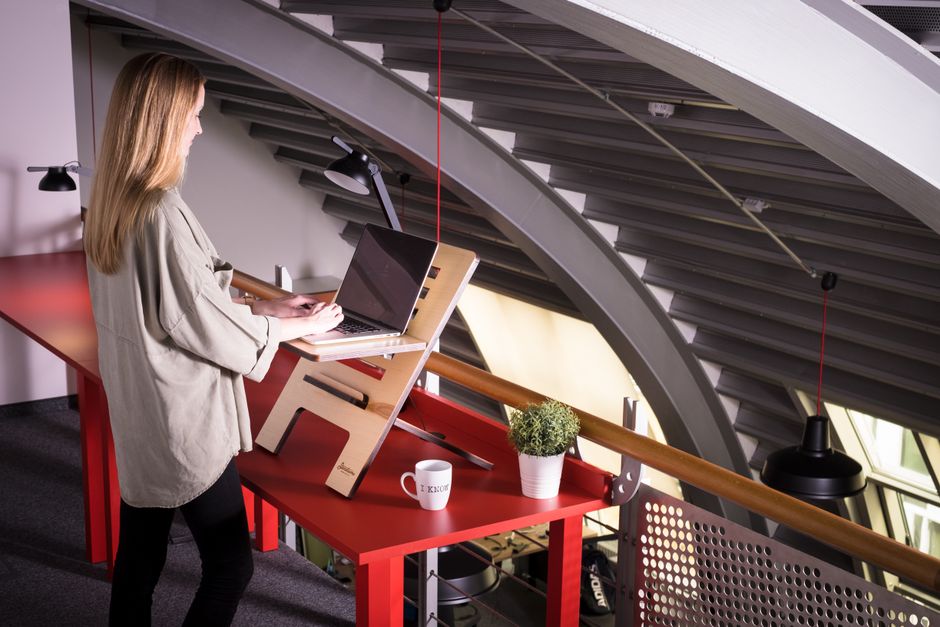
If you spend most of your workday on your feet, you’ve probably felt that sharp, stabbing heel pain that gets worse as the day goes on. Tech workers at standing desks, retail employees, teachers, healthcare workers, and anyone else who stands for hours at a time may face a higher risk of developing plantar fasciitis than people who sit for most of their workday.
The good news is that workplace changes can make a real difference. Let’s look at why standing jobs put your feet at risk and what you can do to protect them.
Why Prolonged Standing Increases Plantar Fasciitis Risk
When you stand in one place for hours, your body weight constantly presses down on the plantar fascia, the thick band of tissue that runs along the bottom of your foot from heel to toes. This tissue acts like a shock absorber when you walk, but standing still creates continuous stress without the relief that comes from changing position.
Unlike walking, which lets different parts of your foot bear weight as you move, static standing keeps pressure on the same spots hour after hour. The plantar fascia develops tiny tears from this repetitive strain, leading to inflammation and pain.
Hard surfaces make the problem worse. Concrete floors, tile, and even some hardwood surfaces offer no cushioning, so your feet absorb all the impact. Over time, this constant load causes the plantar fascia to become irritated and painful, especially at the point where it attaches to your heel bone.
The Footwear Foundation: What to Wear at Work
Your shoes may be an important factor in preventing foot pain at standing jobs. Flat shoes with thin soles provide almost no support, while high heels shift your weight forward and create abnormal tension on the plantar fascia.
Look for shoes with good arch support that matches your foot type. The sole should have some cushioning but not be so soft that your foot sinks in unstably. A slight heel lift of about half an inch to an inch can reduce tension on the plantar fascia, but anything higher shifts too much weight to the front of your foot.
The toe box should be wide enough that your toes don’t feel cramped. Shoes that squeeze your toes can change how you distribute weight across your foot and create additional strain.
For office environments where dress codes matter, look for professional-looking shoes designed with support features. Many shoe manufacturers now make business-appropriate footwear with built-in arch support and cushioning. If your workplace requires specific footwear like steel-toed boots, try styles with added support features or room for supportive insoles. (Part 2 of this series covers insole options in detail.)
Replace your work shoes regularly. Even good supportive shoes lose their cushioning over time, usually after several months of daily wear. When you notice the sole feeling flatter or see visible wear patterns, it’s time for new shoes.
Anti-Fatigue Mats: A Simple Workplace Change That Helps
Anti-fatigue mats are cushioned floor mats designed to reduce the stress of standing on hard surfaces. These mats compress slightly under your weight, encouraging small movements in your leg muscles that improve circulation and reduce static load on your feet.
If you work at a standing desk, an anti-fatigue mat may be helpful. Choose one large enough that you can shift your position without stepping off it. Mats with contoured surfaces that include raised areas for stretching or changing foot position offer additional benefits.
For retail workers, warehouse staff, or others who move around a work area, ask your employer about placing anti-fatigue mats in stations where you stand most often. These might include checkout counters, packing stations, or workbenches.
The mat should be thick enough to provide cushioning but not so soft that it creates an unstable surface. You should feel some give under your feet without feeling like you’re standing on a pillow.
Sit-Stand Routines: Alternating Position Throughout the Day
Even with the best shoes and mats, standing in one position all day puts too much continuous stress on your feet. The solution is to alternate between sitting and standing throughout your workday.
If you have access to a sit-stand desk or adjustable workstation, change position every thirty to sixty minutes. Some people prefer standing for the first part of their day when energy is high, then sitting more in the afternoon. Others do better with frequent switches. Experiment to find what works for your body and your tasks.
For jobs where sitting isn’t an option during work hours, take advantage of every break. Sit down completely during lunch and rest breaks rather than just shifting to a different standing position. Even five minutes of sitting gives your plantar fascia a chance to recover from constant load.
If your job involves moving between different work areas, use that movement as an opportunity to change how you’re using your feet. Walk with purpose rather than shuffling, which actually creates less variety in foot position.
Position Changes and Micro-Breaks That Reduce Foot Strain

Small position changes throughout the day can help prevent the repetitive stress that leads to plantar fasciitis. These micro-breaks take just seconds but reduce continuous strain on the same tissues.
Shift your weight from one foot to the other every few minutes. This simple change redistributes pressure and gives each foot brief recovery time. If you’re focused on a task, set a quiet timer as a reminder to shift position.
Change the direction you’re facing. If you’re at a standing desk, keep items you need in different locations so you naturally turn and reach in various directions. This varies the angles at your ankles and reduces repetitive stress.
Step in place occasionally to get blood flowing and change pressure points. Even just lifting one heel at a time while keeping your toes on the ground creates movement in the plantar fascia rather than static tension.
Rock gently from heels to toes and back a few times every hour. This movement stretches the plantar fascia and surrounding tissues, reducing the constant load. Don’t force the movement or do it quickly; gentle and controlled is more effective.
If you have a footrest or a small stable box near your standing station, occasionally rest one foot on it for a few minutes, then switch feet. This changes the angle of your ankle and reduces strain on the plantar fascia.
How to Discuss Accommodations With Your Employer
Many employers are willing to make reasonable accommodations for health concerns, but they may not know what would help unless you ask. The conversation works best when you’re specific about what you need and how it relates to doing your job well.
Start by documenting how heel pain affects your work. Notice when the pain is worst and what seems to help or hurt. This information makes your request more concrete and shows you’ve thought about practical solutions.
Schedule a time to talk with your supervisor or human resources department rather than bringing it up casually. Explain that you’re experiencing foot pain related to prolonged standing and that you’d like to discuss modifications that could help.
Be ready with specific requests. Rather than saying “I need to sit more,” try “I’d like to explore having a stool at my station so I can alternate between sitting and standing during long shifts.” Instead of a vague request for “better conditions,” ask for “an anti-fatigue mat at my workstation to reduce stress on hard flooring.”
Frame requests in terms of productivity and job performance. You might say, “I believe this change will help me maintain focus and energy throughout my shift” or “This accommodation would help me work more comfortably and effectively.”
If your employer seems hesitant, offer to try a temporary solution first. Suggest a trial period to demonstrate that the accommodation helps without disrupting workflow or affecting other employees.
Under the Americans with Disabilities Act, employers must provide reasonable accommodations for medical conditions that substantially limit major life activities, though the specifics depend on your situation and workplace size. If you have a formal diagnosis from a healthcare provider, you may want to discuss that documentation as well.
If your employer provides an anti-fatigue mat, adjustable workstation, or other accommodation, follow through by using it consistently. This shows that the change genuinely helps and may make future requests easier.
Building Workplace Habits That Protect Your Feet
Prevention works better than treatment when it comes to plantar fasciitis. Building protective habits into your work routine now can save you from months of heel pain later.
Start your day with appropriate footwear already on. Avoid the temptation to wear unsupportive shoes for your commute and change at work. Your feet need consistent support, especially during long standing shifts.
Pay attention to early warning signs like achiness in your heels or arches at the end of the day. These mild symptoms often appear before severe plantar fasciitis pain develops. When you notice them, review your footwear, standing habits, and break schedule to see what might need adjustment.
Make position changes automatic rather than waiting until you feel discomfort. By the time your feet hurt, you’ve already stressed the tissue. Regular preventive movement works better than reacting to pain.
If you work rotating shifts, remember that night shifts can affect your body differently. You may need to be even more conscious about position changes and breaks when your body’s natural rhythms are disrupted.
Consider what you do outside work hours as well. If you stand all day at your job, sitting for leisure activities gives your feet necessary recovery time. If you enjoy active hobbies, supportive footwear matters there too.
| Modification | What to Look For | How It Helps |
|---|---|---|
| Supportive Shoes | Good arch support, cushioned sole, slight heel lift (½ to 1 inch), wide toe box | Reduces tension on plantar fascia and provides cushioning |
| Anti-Fatigue Mats | Thick enough for cushioning but not unstable, large enough to shift position | Encourages small muscle movements and reduces static load on feet |
| Sit-Stand Routine | Alternate every 30-60 minutes, sit during all breaks | Gives plantar fascia recovery time from constant load |
| Position Changes | Shift weight between feet, rock heel to toe, use footrest | Redistributes pressure and reduces repetitive stress |
When Workplace Changes Aren’t Enough
Sometimes even with good shoes, anti-fatigue mats, and regular position changes, heel pain persists or worsens. If your pain is severe, lasts more than a few weeks despite workplace modifications, or interferes with daily activities, it’s time to see a healthcare provider.
Sharp pain that occurs with your first steps after sitting or in the morning, pain that worsens throughout the day, or pain that doesn’t improve with rest may indicate plantar fasciitis that needs medical attention. A healthcare provider can recommend additional treatments beyond workplace changes. (Parts 1, 4, and 5 of this series cover home treatment options in detail.)
Your work environment is where you spend much of your day, so making it foot-friendly matters enormously for preventing and managing plantar fasciitis. Small changes in footwear, matting, position habits, and work routines can make the difference between pain-free days and chronic heel problems. Start with one or two changes that seem practical for your workplace, then add others as you see what helps. Your feet carry you through thousands of steps at work each week—they deserve support and care.
Disclaimer: This article is for general information only and does not replace professional medical advice. Talk with your doctor or pharmacist before making changes to your health care, and call 911 in an emergency.
Leave a Reply