Strength Training for Complete Beginners
How to Start Lifting Weights Safely in Your 40s, 50s, and Beyond
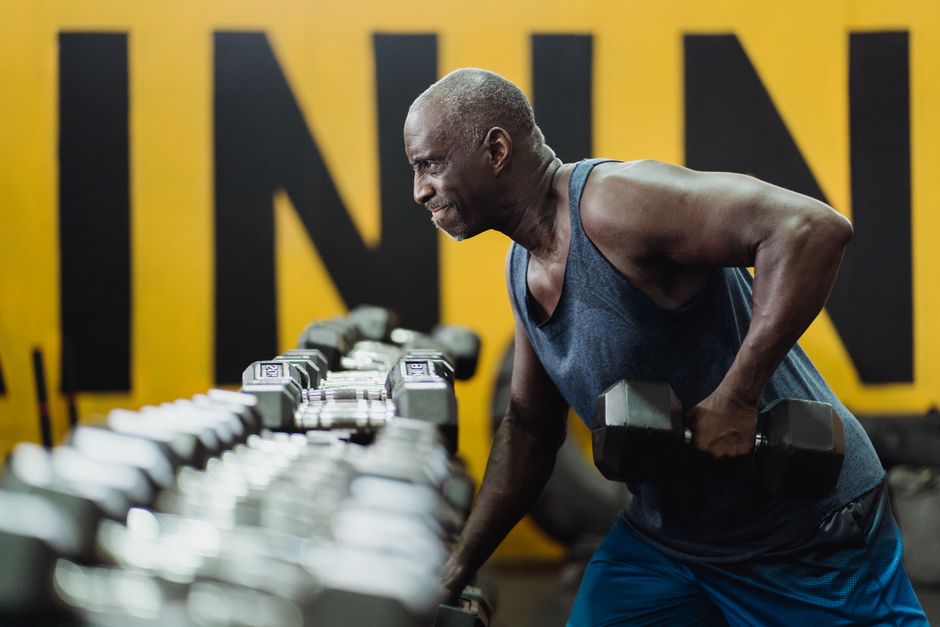
If you’ve never lifted weights before, the idea of starting now might feel intimidating. You might worry about looking foolish, getting injured, or whether you’re “too old” to begin. The good news is that strength training is one of the beneficial forms of exercise you can do at any age, and complete beginners often see improvements in muscle strength, bone density, balance, and everyday function.
Starting a strength training program in your 40s, 50s, or beyond requires a thoughtful approach, but it doesn’t have to be complicated. This guide will walk you through the fundamental principles, proper techniques, and safety practices that will help you build strength confidently and sustainably.
Why Strength Training Matters After 40
As we age, we naturally lose muscle mass and bone density. This process accelerates after middle age and contributes to weakness, falls, fractures, and difficulty with daily activities like carrying groceries, getting up from a chair, or climbing stairs.
Strength training directly counteracts these changes. Regular resistance exercise helps maintain and build muscle, strengthens bones, improves balance, supports joint health, and helps manage weight. It can also improve insulin sensitivity, support heart health, and boost mood and cognitive function.
The key point is this: you don’t need to have exercised in the past to benefit now. Your muscles and bones respond to strength training at any age.
Basic Strength Training Principles
Strength training works by challenging your muscles with resistance, which causes them to adapt and grow stronger over time. This happens through a process called progressive overload, which simply means gradually increasing the challenge as your body adapts.
You create this challenge by lifting weights, using resistance bands, or working against machines. The resistance causes small, controlled stress to your muscle fibers, which then repair and rebuild stronger during rest periods.
For beginners, the most important principle is consistency over intensity. Starting with lighter weights and focusing on proper form will create better long-term results than trying to lift heavy too soon. Your body needs time to adapt not just in your muscles, but also in your tendons, ligaments, and joints.
Understanding Progressive Overload for Beginners
Progressive overload doesn’t mean adding weight every single workout. For complete beginners, especially those over 40, progress happens in several ways.
You might start by simply learning the movement patterns with very light weights or even no weight at all. Then you gradually add weight in small increments. You can also progress by adding more repetitions, adding more sets, or improving your form and control.
A safe approach is to stay with the same weight until you can complete all your planned sets and repetitions with good form and moderate effort. When that feels manageable, you can add a small amount of weight. For upper body exercises, increases of one to three pounds are appropriate. For lower body exercises, increases of three to five pounds work well.
Patience is essential. Increasing weights too quickly is a common cause of injury and setbacks for new lifters.
Choosing Between Free Weights, Machines, and Resistance Bands
Each type of resistance tool has advantages and disadvantages, and many people benefit from using a combination.
Machines are often beginner-friendly. They guide your movement along a fixed path, which reduces the risk of moving incorrectly. They’re especially helpful when you’re learning how a particular muscle group should feel during an exercise. The main limitation is that machines don’t challenge your stabilizing muscles as much, and they may not fit all body sizes comfortably.
Free weights include dumbbells, barbells, and kettlebells. They require you to control the movement in all directions, which builds functional strength and engages stabilizing muscles. Dumbbells are particularly useful for beginners because you can start very light and each arm works independently, which helps identify and correct strength imbalances. The trade-off is that free weights require more attention to form and technique.
Resistance bands provide a different type of resistance that increases as you stretch the band. They’re portable, inexpensive, and gentle on joints. They’re useful for warming up, for traveling, and for certain exercises where the resistance pattern matches well with natural movement. The main limitation is that it can be harder to measure and track progressive overload precisely.
For complete beginners, starting with a mix of machines and light dumbbells often works well. As you gain confidence and learn proper form, you can incorporate more free weight exercises.
Foundational Exercises and Proper Form
A well-rounded strength program includes exercises that work all major muscle groups: legs, hips, back, chest, shoulders, and arms.
Some foundational movements form the basis of strength programs:
Squats work your legs, hips, and core. Stand with feet about shoulder-width apart, toes pointing slightly outward. Lower yourself as if sitting back into a chair, keeping your chest up and knees tracking over your toes. Press through your heels to stand back up. You can start by practicing this movement without any weight, holding onto a sturdy surface for balance if needed.
Deadlifts or hip hinges strengthen your back, hips, and legs. This movement involves bending at the hips while keeping your back straight, then standing back up. Beginners can start with very light dumbbells held at your sides or practice the movement pattern with no weight at all.
Chest press exercises work your chest, shoulders, and triceps. You can do these with dumbbells on a bench, lying on the floor, or using a chest press machine. Start with the weight at chest level and press upward until your arms are extended, then lower back down with control.
Rows strengthen your upper back and biceps. Using dumbbells, a cable machine, or a rowing machine attachment, you pull weight toward your torso while keeping your back straight and squeezing your shoulder blades together.
Overhead press movements work your shoulders and triceps. Press weights from shoulder height up overhead, then lower them back down with control.
Core exercises strengthen your abdominal and lower back muscles, which support nearly every other movement. Simple exercises like planks, bird dogs, and dead bugs are good starting points.
The Critical Importance of Proper Form
Good form serves two purposes: it keeps you safe and it ensures the intended muscles are actually doing the work.
For every exercise, focus on these general principles:
Move through a full range of motion that feels comfortable for your body. Control the weight in both directions rather than using momentum or dropping the weight. Keep your core engaged to protect your spine. Breathe steadily, exhaling during the exertion phase and inhaling during the easier phase.
Your spine position matters greatly. For many exercises, maintain the natural curves of your spine rather than rounding your back or overarching. If you’re unsure whether your back position is safe, working with a qualified personal trainer for even a few sessions can be invaluable.
Don’t sacrifice form to lift heavier weight or complete more repetitions. If your form breaks down, the set is over. Lower the weight or take a rest before continuing.
How to Choose Your Starting Weights
This question worries many beginners, but the answer is simpler than you might think: start lighter than you think you need to.
For your first workout with a new exercise, choose a weight that feels quite easy. You should be able to complete 10 to 12 repetitions while maintaining good form and feeling like you could do several more. This very light starting point lets you practice the movement pattern and see how your body responds over the next day or two.
Many beginners experience muscle soreness after their first few workouts, even when the weights felt easy during the session. This delayed onset muscle soreness is normal and typically peaks one to two days after exercise. Starting light helps keep this soreness manageable rather than debilitating.
At your second or third session with an exercise, you can adjust the weight based on how that first session felt. If you barely felt anything during or after, you can increase the weight. If you were very sore or the form was challenging, stay with the same weight.
A good working weight for exercises should feel moderately challenging during the last few repetitions of your final set, but still allow you to maintain good form throughout.
Safe Progression Timelines
The speed of progression varies greatly from person to person and depends on factors like your starting fitness level, consistency, nutrition, sleep, and stress levels.
In your first few weeks, much of your improvement comes from neuromuscular adaptation. This means your nervous system is learning to recruit muscle fibers more efficiently. You might feel significantly stronger without actually building much muscle tissue yet. This is normal and beneficial.
After this initial learning phase, actual muscle building takes more time. For complete beginners following a consistent program, noticeable strength improvements often become apparent within four to eight weeks. Visible changes in muscle tone typically take longer, often several months.
Realistic expectations help you stay motivated. Progress after 40 may happen more gradually than for younger adults, but it does happen. Comparing yourself only to your own previous performance, not to others, keeps you focused on steady improvement.
Plan to add weight or increase difficulty every two to four weeks for a given exercise, but listen to your body. Some exercises might progress faster than others, and that’s fine.
Recovery Needs and Workout Frequency

Recovery is when your muscles actually repair and strengthen. Without adequate recovery, you risk injury, exhaustion, and poor results.
For complete beginners over 40, starting with two strength training sessions per week allows your body to adapt while providing enough stimulus for improvement. These sessions should be separated by at least one rest day, and ideally two. As you adapt over several months, you might increase to three sessions per week.
Each muscle group generally needs about 48 hours of recovery before being worked hard again. A common approach is to do full-body workouts with rest days in between, or to alternate between upper body and lower body workouts on different days.
Sleep quality directly affects recovery. Individual sleep needs vary.
Nutrition also supports recovery, particularly adequate protein intake. Research suggests that older adults may benefit from consuming protein throughout the day with meals. Good protein sources include lean meats, fish, eggs, dairy products, beans, lentils, and soy products.
Don’t confuse rest days with complete inactivity. Light activity like walking, gentle stretching, or the low-impact cardio options discussed in Part 5 of this series can support recovery by increasing blood flow without stressing recovering muscles.
Recognizing and Avoiding Injury
Some muscle soreness, especially when starting out, is normal and expected. However, sharp pain, joint pain, or discomfort that worsens with movement are warning signs that something is wrong.
Learn to distinguish between muscle fatigue and pain. Muscle fatigue during a set feels like a burning sensation and difficulty completing the movement. This is normal during the last few repetitions of a challenging set. Pain, especially sharp or shooting sensations, is a signal to stop immediately.
Joint pain during or after strength training is not normal and often indicates a form problem, inappropriate weight selection, or an underlying issue that needs attention. If you experience persistent joint pain, consult a doctor or physical therapist before continuing.
Common injury risks for beginners include lifting too much weight too soon, using poor form, not warming up adequately, and not allowing enough recovery time.
A simple warm-up of five to ten minutes of light activity that raises your heart rate slightly and moves your joints through their range of motion helps prepare your body for strength work. This might include walking, easy cycling, or dynamic stretching movements.
Special Considerations for Adults Over 40
If you have any chronic health conditions, take prescription medications, have had recent surgery or injury, or haven’t been physically active in a long time, checking with your doctor before starting a strength training program is wise.
Certain conditions may benefit from modified approaches. Talk with your doctor or physical therapist about any specific considerations for your situation.
If you take medications for diabetes, be aware that exercise can affect blood sugar. Review your exercise plans with your doctor, especially regarding medication timing and monitoring blood sugar around workouts.
Balance can be a concern when handling weights, particularly for exercises performed standing. Using machines, sitting for certain exercises, or staying near a wall or sturdy surface for balance can reduce fall risk as you build strength and confidence.
Some people experience dizziness when changing positions quickly, such as moving from lying to sitting. Make position changes slowly and deliberately, and ensure you feel steady before picking up weights.
If you experience chest pain, severe shortness of breath, sudden dizziness, or other concerning symptoms during exercise, stop immediately and call 911 if symptoms are severe or don’t resolve quickly with rest.
Working with Professionals
While many people successfully start strength training on their own using reliable resources, working with qualified fitness professionals can accelerate learning and reduce injury risk.
A certified personal trainer with experience working with older adults can teach proper form, design a program appropriate for your goals and limitations, and provide accountability. Even a few sessions can be valuable for learning foundational movements correctly.
Physical therapists can be particularly helpful if you have existing injuries, chronic pain, or significant movement limitations. They can assess your specific situation and provide exercises that work around or address those issues.
Many gyms and community centers offer group strength training classes designed for older adults. These provide instruction, social connection, and often a more affordable option than individual training.
Creating Your Beginning Program
A simple starting program for complete beginners might include two full-body workouts per week, each containing one exercise for each major muscle group.
Each workout might include a leg exercise like squats or leg presses, a pushing exercise for the chest and arms like a chest press, a pulling exercise for the back like a row, a shoulder exercise like an overhead press, and a core exercise.
Start with one to two sets of 8 to 12 repetitions for each exercise. This range can help build both strength and muscle for beginners. Rest for one to two minutes between sets to allow recovery.
The entire workout might take 30 to 45 minutes, including warm-up and cool-down. You don’t need to spend hours in the gym to see benefits.
Keep a simple log of what exercises you did, how much weight you used, and how many repetitions you completed. This tracking helps you apply progressive overload systematically and provides motivating evidence of your progress.
Building Confidence Over Time
Starting something new, especially something physical, can feel uncomfortable at first. Many beginners worry about looking out of place or not knowing what to do.
Remember that everyone in every gym started as a complete beginner at some point. Many people are focused on their own workouts.
If you feel self-conscious about going to a gym, you might start with home workouts using a basic set of dumbbells or resistance bands, as discussed in Part 1 of this series. As you build strength and confidence at home, transitioning to a gym environment often feels less intimidating.
Many people find that strength training becomes genuinely enjoyable once they move past the initial learning curve. The sense of accomplishment from lifting more than you could last month, the improved ability to do everyday tasks, and the positive changes in how your body feels can be deeply satisfying.
| Equipment Type | Advantages | Limitations |
|---|---|---|
| Machines | Guide movement along fixed path; beginner-friendly; help you feel which muscles should work | Don’t challenge stabilizing muscles as much; may not fit all body sizes |
| Free Weights | Control movement in all directions; build functional strength; dumbbells allow each arm to work independently | Require more attention to form and technique |
| Resistance Bands | Portable; inexpensive; gentle on joints; good for warming up and traveling | Harder to measure and track progressive overload precisely |
Moving Forward
Strength training is a skill that you’ll continue learning and refining over months and years. Your first workouts don’t need to be perfect. They just need to happen.
Focus on consistency, proper form, gradual progression, and adequate recovery. These four principles will serve you well whether you’re just starting or years into your strength training journey.
The strength you build through resistance training supports every other aspect of an active life. It makes the movements discussed in Part 4 of this series easier, enhances your ability to enjoy the cardiovascular activities in Part 5, and helps protect your joints as mentioned in Part 2.
You’re not too old to start, and it’s not too late to build meaningful strength. With a thoughtful, patient approach, you can safely develop a stronger, more capable body that serves you well for decades to come.
Disclaimer: This article is for general information only and does not replace professional medical advice. Talk with your doctor or pharmacist before making changes to your health care, and call 911 in an emergency.
Leave a Reply