Exercises to Do If You Sit at a Desk All Day
Counteracting the Health Risks of Sedentary Work
If you spend most of your workday sitting, you’re not alone. Many adults over fifty find themselves at desks for hours at a time, whether working from home, in an office, or managing finances and correspondence. While sitting itself isn’t harmful in moderation, spending many hours in a chair day after day can create specific patterns of tightness and weakness that affect how you feel and move.
The good news is that targeted stretches, simple exercises, and smart movement strategies can help address these effects. Let’s look at what prolonged sitting does to your body and how to counteract it with practical movements you can do during your day.
How Prolonged Sitting Affects Your Body
When you sit for extended periods, certain muscles stay shortened while others remain inactive. Your hip flexors, the muscles at the front of your hips, stay in a contracted position hour after hour. Over time, these muscles can become tight and shortened, which can change your posture and make it harder to stand up straight or walk comfortably.
Meanwhile, your hip extensors and glutes, the muscles that help you stand and walk, stay relatively inactive. This can lead to weakness that affects your balance and walking pattern.
Your spine experiences changes too. Many people tend to slouch or round forward while sitting, especially when looking at a computer screen. This position puts your upper back into a rounded curve and your head forward, which strains the muscles and joints of your neck and upper back. The muscles between your shoulder blades become overstretched and weak, while the chest muscles become tight.
The lower back also suffers during prolonged sitting. The natural curve of your lumbar spine can flatten out, which increases pressure on the discs between your vertebrae. Some people develop lower back stiffness or discomfort as a result.
Stretches to Address Desk-Related Tightness
Stretching the areas that become tight from sitting can provide relief and help restore better movement patterns. These stretches are gentle enough to do during your workday.
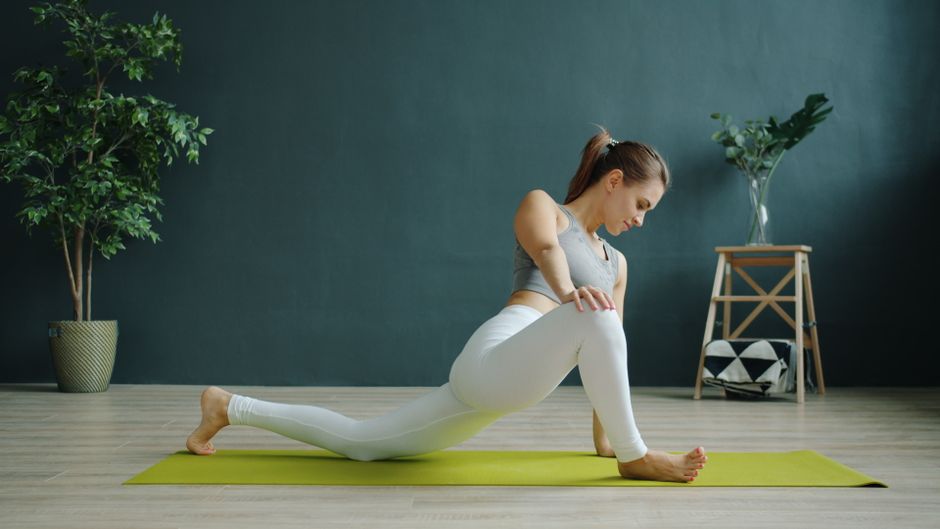
Hip Flexor Stretch
Stand up and take a large step backward with your right foot, keeping your left foot forward. Lower your hips down and slightly forward until you feel a gentle stretch at the front of your right hip. Keep your torso upright rather than leaning forward. Hold for twenty to thirty seconds, then switch sides.
You can do this stretch while holding onto a desk or countertop for balance. Doing this stretch several times throughout the day can help reduce the tightness that builds up from sitting.
Chest Doorway Stretch
Stand in a doorway and place your forearm against the door frame with your elbow bent at about shoulder height. Step forward slightly with one foot until you feel a gentle stretch across your chest and the front of your shoulder. Hold for twenty to thirty seconds on each side.
This stretch helps open up the chest muscles that become tight when you’re hunched forward at a desk.
Seated Spinal Twist
While sitting in your chair, place your right hand on the outside of your left thigh. Gently rotate your upper body to the left, looking over your left shoulder. Keep your hips facing forward. Hold for fifteen to twenty seconds, breathing normally, then repeat on the other side.
This gentle twist helps maintain mobility in your mid-back and can relieve stiffness from staying in one position.
Neck Side Stretch
Sit or stand with good posture. Gently tilt your head toward your right shoulder, bringing your right ear closer to your shoulder without lifting the shoulder up. You should feel a mild stretch along the left side of your neck. Hold for fifteen to twenty seconds, then repeat on the other side.
Avoid pulling on your head with your hand, which can create too much stretch. Let gravity do the work.
Exercises to Strengthen What Sitting Weakens
Stretching tight areas is only half the solution. You also need to strengthen the muscles that become weak from prolonged sitting.
Glute Squeezes
While sitting in your chair, squeeze your glutes (buttock muscles) together firmly, hold for five seconds, then release. Repeat ten to fifteen times. This simple exercise helps wake up muscles that often “turn off” during long periods of sitting.
You can do this exercise several times throughout your workday without anyone noticing.
Seated Marching
Sit up tall in your chair with your feet flat on the floor. Lift your right knee up a few inches, hold for two seconds, then lower it. Repeat with your left knee. Continue alternating for twenty to thirty repetitions total.
This exercise engages your hip flexors and core muscles in a more active way than sitting still.
Upper Back Strengthener
Sit or stand with your arms at your sides. Squeeze your shoulder blades together gently, as if you’re trying to hold a pencil between them. Hold for five seconds, then release. Repeat ten to fifteen times.
Make sure you’re squeezing your shoulder blades back rather than just lifting your shoulders up toward your ears. This movement strengthens the muscles between your shoulder blades that become weak from slouching.
Chin Tucks
Sit up straight and look forward. Without tilting your head up or down, gently draw your chin straight back, creating a “double chin” appearance. You should feel a gentle stretch at the base of your skull. Hold for five seconds, then relax. Repeat ten times.
This exercise helps counteract the forward head position that strains your neck during computer work.
Movement Breaks and Micro-Workouts During the Workday
Taking regular breaks from sitting is important. Research suggests that breaking up long periods of sitting with brief movement can have health benefits.
The Two-Minute Stand and Stretch
Set a reminder to stand up every thirty to sixty minutes. When the reminder goes off, stand up and do some simple movements for two minutes. Walk around your workspace, do a few arm circles, or perform one or two of the stretches mentioned earlier.
Even this brief interruption to sitting can help reduce stiffness and keep your circulation moving.
Standing Phone Calls
Make it a habit to stand up whenever you take a phone call. If the conversation is longer, walk around while you talk. This simple strategy can add significant standing and walking time to your day without requiring extra effort.
Desk Push-Ups
Stand facing your desk at arm’s length. Place your hands on the edge of the desk about shoulder-width apart. Step your feet back so your body forms a straight line. Lower your chest toward the desk by bending your elbows, then push back up. Do five to ten repetitions.
This movement strengthens your chest, shoulders, and arms while also engaging your core muscles. Make sure your desk is stable and won’t slide before doing this exercise.
Calf Raises at Your Desk
While standing, rise up onto your toes, hold for two seconds, then lower back down. Repeat fifteen to twenty times. You can hold onto your desk for balance if needed.
This simple exercise keeps your calf muscles active and promotes circulation in your lower legs, which can reduce the feeling of heavy or tired legs after sitting.
Stair Opportunities
If you have access to stairs, use them for brief movement breaks. Climbing one or two flights of stairs provides a quick burst of activity that gets your heart rate up and engages your leg muscles. Going up and down stairs a few times during the day adds meaningful movement without requiring a formal workout.
Targeting Problem Areas: Hip Flexors, Upper Back, and Neck
These three areas deserve special attention because they’re often affected by desk work.
Hip Flexor Release and Strengthen
Your hip flexors need both stretching and strengthening, but in different positions. The standing hip flexor stretch described earlier addresses tightness. To strengthen your hip flexors in a lengthened position, try standing leg raises.
Stand next to a wall or sturdy surface for balance. Keeping your standing leg straight, lift your other leg forward with your knee straight, raising it to a comfortable height. Lower it back down with control. Do ten to twelve repetitions on each leg.
This exercise strengthens your hip flexors while your hip is extended rather than flexed, which helps create better balance in these muscles.
Upper Back Mobility Exercise
Sit in a chair with your hands clasped behind your head. Keep your elbows wide. Gently arch your upper back, lifting your chest toward the ceiling and bringing your elbows back. Hold for three to five seconds, then return to a neutral position. Repeat eight to ten times.
This movement helps restore the natural curve of your upper back and counteracts the rounded-forward position of desk work.
Neck Strengthening
Many people stretch their necks but never strengthen them. To gently strengthen your neck muscles, place your hand against your forehead and press your head forward into your hand while your hand resists, preventing your head from actually moving. Hold for five seconds, then relax.
Repeat this isometric exercise with your hand on the back of your head (pressing backward), then on each side of your head (pressing sideways). This builds strength in all the neck muscles without actually moving your neck through a range of motion.
If you have neck pain, dizziness, or a history of neck problems, check with your doctor or physical therapist before doing neck strengthening exercises.
Strategies to Increase Daily Movement Beyond Formal Exercise
While specific exercises help, increasing your overall daily movement has health benefits too. Small changes in your routine can add up to increases in activity.
Walking Meetings and Catch-Ups
If you have informal meetings or phone conversations with colleagues, suggest taking them as walking meetings. Even walking slowly provides movement that’s far better than sitting.
For in-person meetings, arriving a few minutes early gives you time for a brief walk before sitting down.
The Long Route
Choose parking spots farther from entrances. Take the long way to the restroom or break room. If you work from home, take a lap around your house or yard between tasks. These extra steps accumulate throughout the day.
Active Waiting
When you’re waiting for something to print, for a file to load, or for water to boil, use those moments for movement. Do a few calf raises, march in place, or do some arm circles. These brief bursts of activity add up.
Post-Meal Walks
Taking a short walk after meals, even just five to ten minutes, helps with digestion and breaks up sitting time. If you eat lunch at your desk, make it a priority to take a brief walk afterward before settling back into work.
Standing While You Can
Look for opportunities to stand while doing tasks that don’t require sitting. You might stand while reading documents, making phone calls, or having casual conversations. Some people keep a high counter or shelf where they can place a laptop for occasional standing computer work.
You don’t need an expensive standing desk to add more standing to your day. Simply moving to a higher surface for some tasks can help.
Evening Movement Habits
After a day of sitting at work, make movement part of your evening routine. Taking a walk before or after dinner, doing some stretching while watching television, or playing actively with grandchildren all help counteract the day’s sitting.
Part 1 of this series covers how to create a home workout routine with simple equipment if you want more structured evening exercise.
Creating Your Anti-Sitting Routine
The key to counteracting prolonged sitting is consistency rather than intensity. You don’t need to do all these exercises every day. Instead, choose a few that address your particular areas of tightness or discomfort and build them into your daily routine.
A practical approach might include doing two or three stretches during your morning break, taking brief standing breaks every hour, doing a few strengthening exercises at lunch, and taking a short walk in the afternoon. Find a pattern that fits your workday and feels sustainable.
If you have diabetes, take blood pressure medication, or have a condition that affects your balance, talk with your doctor before starting any new exercise routine. Some people may experience dizziness when standing up quickly after sitting for long periods, especially when first increasing their movement.
Listen to your body as you add these movements. You should feel a gentle stretch or mild muscle fatigue, not sharp pain. If any exercise causes pain, skip it and try a different one. Working with a physical therapist can be helpful if you have specific areas of pain or limitation.
| Body Area | Effect of Prolonged Sitting | Exercises to Counteract |
|---|---|---|
| Hip Flexors | Become tight and shortened | Hip Flexor Stretch, Standing Leg Raises |
| Glutes & Hip Extensors | Become weak from inactivity | Glute Squeezes, Seated Marching |
| Chest Muscles | Become tight from hunching forward | Chest Doorway Stretch |
| Upper Back | Rounded curve, muscles become overstretched and weak | Upper Back Strengthener, Upper Back Mobility Exercise |
| Neck | Forward head position strains muscles and joints | Neck Side Stretch, Chin Tucks, Neck Strengthening |
Moving Forward
Sitting at a desk doesn’t have to lead to stiffness, pain, and poor posture. With regular stretching, targeted strengthening, frequent movement breaks, and creative ways to add activity to your day, you can counteract the effects of sedentary work.
Start small by adding just one or two strategies this week. As these become habits, add more. Over time, these small changes can create improvements in how you feel during and after your workday.
The goal isn’t perfection but progress. Every stretch, every standing break, and every extra step helps protect your posture, mobility, and overall health. Your body will thank you for the movement, no matter how you find ways to add it to your day.
Disclaimer: This article is for general information only and does not replace professional medical advice. Talk with your doctor or pharmacist before making changes to your health care, and call 911 in an emergency.
Leave a Reply